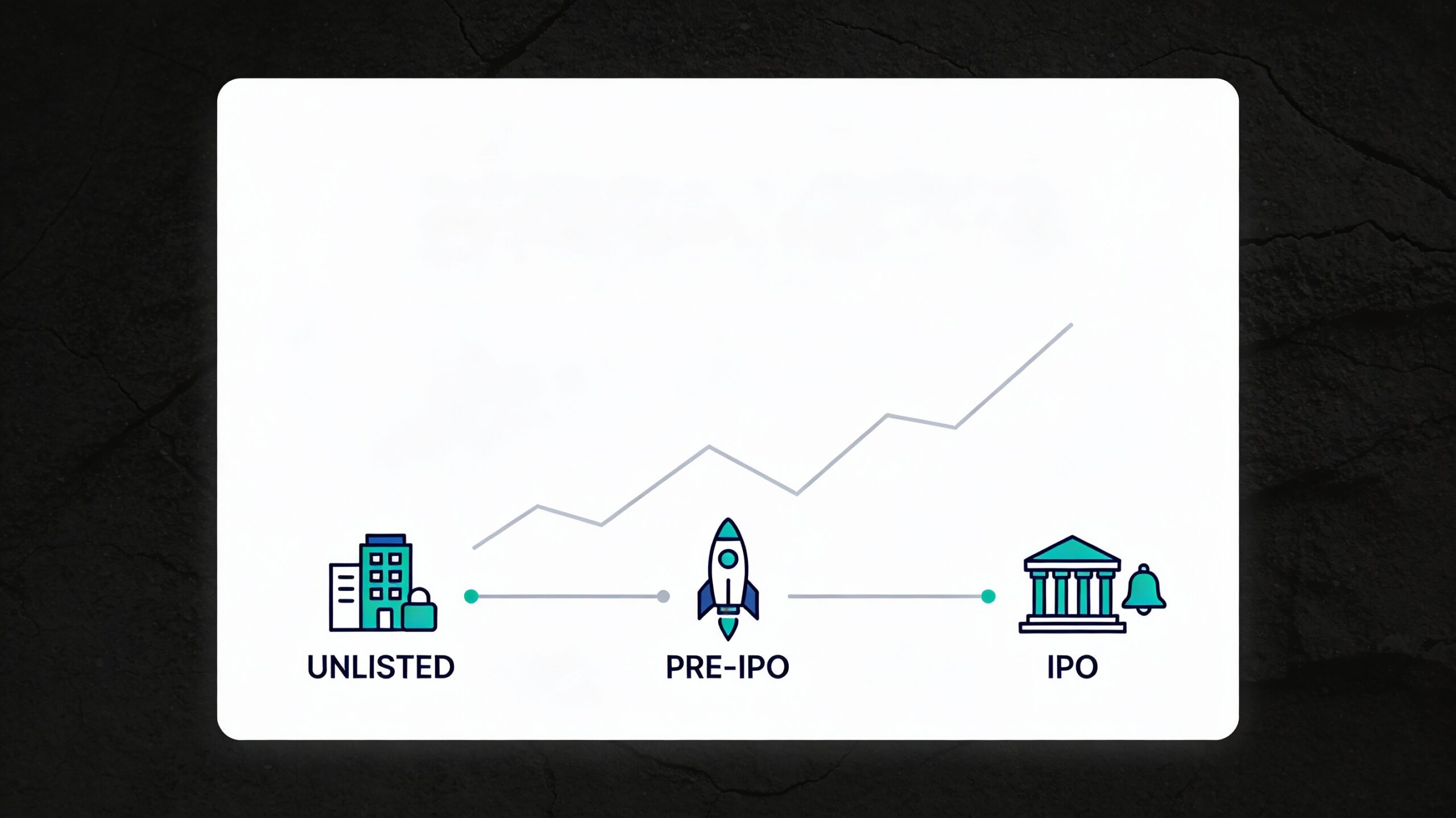
IPO, pre‑IPO, and unlisted shares are often used interchangeably, but they’re three different stages with different liquidity, disclosure, and risk levels. Here’s a blog you can publish for Zelion Ventures on the differences and what investors should watch out for.
IPO vs Pre‑IPO vs Unlisted shares
IPO (Initial Public Offering)
An IPO is when a company offers its shares to the public and gets listed on a stock exchange. After listing, buying/selling is typically easier because you can trade on the exchange with transparent market pricing and higher liquidity.
Pre‑IPO
Pre‑IPO refers to investing in a company shortly before it lists, usually through private transactions/allocations. The opportunity is “early entry,” but you’re still dealing with limited public information, negotiated pricing, and potential listing delays.
Unlisted shares
Unlisted shares are shares of companies that are not listed on a stock exchange (they may or may not be planning an IPO). Transactions happen privately (off-market), so liquidity and pricing depend on finding a counterparty and agreeing on terms.
The biggest differences (simple view)
-
Liquidity: IPO (post-listing) is usually most liquid; pre‑IPO and unlisted are typically illiquid.
-
Price discovery: IPO-listed shares have continuous market pricing; pre‑IPO/unlisted prices are negotiated and can vary widely.
-
Information & disclosures: Listed companies disclose more regularly; pre‑IPO/unlisted disclosures can be limited, increasing uncertainty.
-
Timeline certainty: IPO investing has a defined process; pre‑IPO and unlisted may have open-ended holding periods.
Risks to understand (and how they show up)
IPO risks
-
Allocation uncertainty: Even if you apply, you might not get shares.
-
Listing/market risk: Price can list below issue price if sentiment changes.
-
Post-listing volatility: Early price swings can be sharp, especially in hot sectors.
Pre‑IPO risks
-
Listing may not happen on time (or at all): Delays can lock capital longer than expected.
-
Valuation risk: “Pre‑IPO premium” can be driven by hype; public markets can re-rate the business lower.
-
Lock-in/transfer constraints: Exiting may not be possible until after specific periods or events.
-
Information asymmetry: You may not have the same depth of verified information as public markets.
Unlisted shares risks
-
Illiquidity: Exits can take time, and the spread between buy/sell can be high.
-
Documentation/settlement risk: Weak paperwork or unclear transfer processes can create avoidable trouble.
-
Governance and transparency risk: Fewer disclosures can hide financial or operational stress.
-
Concentration risk: Ticket sizes can be larger, pushing investors to over-allocate.
How to choose what fits your profile
-
Choose IPO-focused investing if you want higher liquidity, simpler access, and clearer pricing—while accepting market volatility.
-
Consider pre‑IPO only if you have a long horizon, can tolerate illiquidity, and can evaluate valuation + documentation carefully.
-
Approach unlisted shares as a high-risk/high-patience segment: keep allocation disciplined, demand strong paperwork, and define exit expectations before entering.
Due diligence checklist (quick)
-
Business basics: revenue drivers, margins, customer concentration, competitive advantage.
-
Valuation logic: compare with listed peers; stress-test downside scenarios.
-
Structure & docs: share class, transfer restrictions, approvals needed, settlement proof.
-
Liquidity plan: realistic exit routes and holding period.
-
Portfolio fit: position size aligned to goals and risk profile.
CTA (for Zelion Ventures)
If you’re evaluating an IPO, a pre‑IPO opportunity, or an unlisted-share deal, a structured review of risk profile, valuation logic, and documentation can prevent expensive mistakes. Connect with Zelion Ventures to assess suitability and build a plan aligned to your long-term goals.