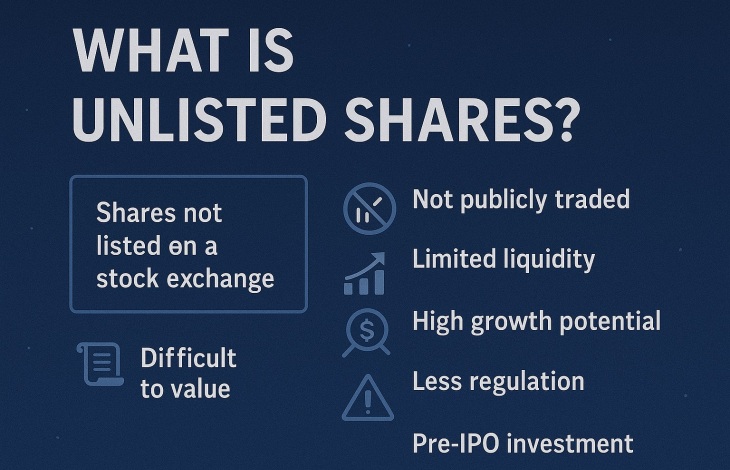
Unlisted shares can be a great way to access companies before they hit the stock market—but beginners should understand how this private market works, what the risks are, and what checks matter most. Unlisted shares are equity shares of companies not listed on NSE/BSE, typically traded through private/OTC transfers rather than on an exchange.
What are unlisted shares?
Unlisted shares belong to companies whose shares aren’t traded on recognized stock exchanges, so buying/selling happens via private transactions and negotiated pricing.
They can include startups, private companies preparing for an IPO, or companies that simply remain private for longer.
Why investors consider them
The main attraction is early access—if the business grows or lists later, investors may benefit from value appreciation.
Unlisted investments can also add diversification because they don’t move with daily stock-market price fluctuations the same way listed shares do.
Key risks beginners must know
Liquidity is the biggest issue: finding a buyer and exiting quickly can be difficult, and timelines can stretch.
Transparency can be lower than listed companies, and price discovery is often less clear because trades are negotiated privately.
How buying/selling typically works
Unlike listed stocks, unlisted shares are commonly transferred via off-market transactions (often between demat accounts), usually through intermediaries/platforms or private deals.
Minimum ticket sizes can be higher than typical stock investing, depending on the company and seller terms.
Beginner evaluation checklist
-
Business & growth: Understand the business model, revenue drivers, and competitive advantage.
-
Valuation sanity: Compare with listed peers where possible and avoid “hype pricing” without numbers.
-
Liquidity plan: Decide the holding period upfront and don’t invest money needed in the near term.
-
Documentation & transfer: Confirm share type, transfer restrictions, settlement process, and proof of ownership.
-
Taxes: Know that taxation rules for unlisted shares differ from listed shares and depend on holding period.